


Congleton Museum
Congleton Museum Trust, a registered charity, was formed in 1985 by a group of local history enthusiasts to pull together as much as possible of the history of Congleton and to explore ways of exhibiting it to the community. It was 2002 before the trust managed to open the museum in the former police station next to the Town Hall. There was by then a wealth of fascinating artefacts to display, including an Anglo Saxon log boat, a burial urn from 1500 BC,two major coin hoards from the 17th Century, plus numerous items of historical interest from more recent times.
The first settlements in the Congleton area were in Neolithic times, and archaeological finds tell us people lived here in both the Stone and Bronze Ages. There is little evidence of Roman occupation, but the Vikings made their mark by destroying nearby Davenport which allowed Congleton to become the local market town.
In Saxon days Earl Godwin of Wessex held the town, but by the time of the Domesday Book of 1086, William the Conqueror had made his nephew Earl of Chester and granted him the whole of Cheshire. He in turn passed
‘Cogletone’, which had been laid waste by the king’s army, to his man Bigot.

Ulster Folk and Transport Museum
Experience what life was like in Northern Ireland over 100 years ago, and explore one of the most comprehensive transport collections in Europe.
Wander through the beautiful parkland of the Folk Museum, where you will encounter costumed locals, demonstrating traditional crafts in cottages, farm dwellings, schools, and shops.
You’ll find majestic locomotives, horse-drawn carriages, vintage motorbikes, and cars at the Transport Museum, along with exhibits of historical materials including photographs of the Titanic.
Read More
Castle and Regimental Museum, Monmouth
This volunteer-run museum tells the story of the Royal Monmouthshire Royal Engineers (Militia) – from the starting point of a muster in 1539 – in the reign of Henry VIII – before firearms were in general use – and before there was a Regular Army. Over the years it became a Militia regiment, officered by the local aristocracy, to maintain law and order within the county. In the 19th century new police forces took over these duties, and the Regiment, disillusioned and keen to serve abroad, switched to a more useful role in the Royal Engineers Reserve. The Double Royal title soon followed. It is now in the Army Reserve – is the only regiment to have survived from the Militia – and is the Senior Regiment of the Reserve Army.
The museum’s display focuses on the Militia system and the Regiment’s links with the powerful Dukes of Beaufort, the local gentry, and Monmouth town. The Regimental Colours and the Freedoms of towns are on view, and exhibits recount the Regiment’s service in the Militia and the Boer War, and in the two World Wars, and more recent conflicts. Archaeological artefacts illustrate the earliest defences of Monmouth – and a small section deals with Henry V, the victor of Agincourt, who was born in Monmouth Castle in 1387. Mine clearance, the Home Front and Women’s roles, and HMS Monmouth are also featured.
Read More
Museum of Farnham
The Museum of Farnham is a local history museum, located in a beautiful Georgian town house with many original features and a delightful walled garden.
Visit us to discover Farnham’s history, from its prehistoric roots to its hop growing boom and Georgian grandeur. Discover the tales of the illustrious William Cobbett, political agitator, and George Sturt local author and craftsperson, whilst marvelling at the inventions of engineer John Henry Knight, who created one of the first petrol driven cars!
The museum is also home to an extensive art and craft collection thanks to the many artists and crafts people who have been drawn to Farnham over the years.
The Museum of Farnham is part of Farnham Maltings Association, a creative organisation that works with artists and communities to encourage the most people to make, see and enjoy the best art possible. The Museum works actively with the Farnham Maltings to reach these goals.
Read More
Egham Museum
Established in 1968, The Egham Museum is an independent, community museum and registered charity reliant on volunteers. Through our exhibitions, outreach programmes and innovative use of our collections, we provide for our local communities and visitors a centre of life-long learning dedicated to raising awareness, sharing knowledge and promoting enjoyment of history.
Read More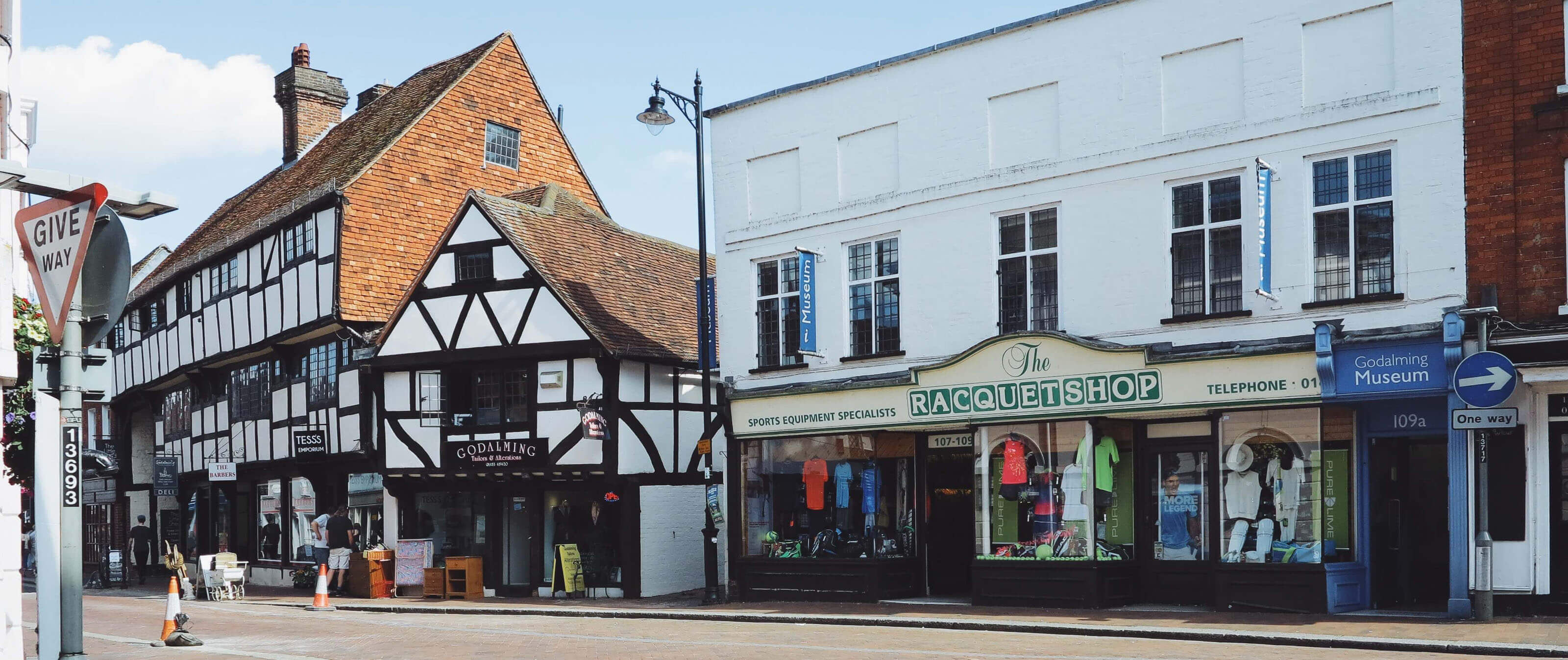
Godalming Museum
Revisit the 19th and 20th centuries with displays on local shops and industries, the First and Second World Wars, schools and celebrations. Don’t miss the man trap, the extraordinary collection of bottles and potions from Norman’s Chemist shop or the framework knitting machine. Find out about the exciting world of 1950s cycle speedway in a unique board game based on the memories of local riders. Try some maths on an abacus or writing on a slate, or settle down to some 1930s games – anyone for tiddly winks?
Read More
The Novium Chichester
The Novium is a museum in Chichester, West Sussex, southern England. The name comes from the Roman name for the city “Noviomagus Reginorum”.
The museum, designed by the architect Keith Williams following an architectural design competition managed by RIBA Competitions, has an area of 1,300 sq m which is approximately 2.4 times the size of the previous museum in Little London. The building is divided into three floors each of which will contain a gallery for exhibition. It contains a research and learning room as well as a collection store for the social history collection. The museum is built directly over the top of the Chichester’s Roman Bath House complex which are displayed in the ground floor gallery.
The museum has over 350,000 objects of geological, archaeological and social historic interest. The social history and geological collections is made up of some 50,000 objects which are housed within the new building, whilst the archaeological collection is contained in a purpose built store within the Discovery Centre located at Fishbourne Roman Palace.
Read More
The Atkinson
he Atkinson is Southport’s beautiful new home for music, theatre, art, poetry, literature and history, right in the middle of Lord Street in Southport and just 3 minutes’ walk from Southport train station. Significant investment has been made in refurbishing the stunning 19th century buildings, to create a really welcoming multi art-form venue with a strong contemporary feel.
It offers an exciting and varied destination for families, cultural tourists and arts enthusiasts alike, with a full day and night time offer. While the day away visiting the new shop, that sells gifts and contemporary crafts from regional makers and then relax in the Bakery, choosing from a selection of artisan bread sandwiches, cakes and sharing platters. Wonder through the major exhibitions and see performances from some of the UK’s foremost musicians, actors, performers and companies, films, family activities and much more.
In October 2014 our new Egyptology Gallery gallery opened, the new home of the Goodison Egyptology Collection, which has not been seen for over 40 years. Families can find out about life and how it really was for the Egyptians and the difference between being rich and poor at that time.
Read More
Carisbrooke Castle Museum
Carisbrooke Castle Museum is an Accredited local history museum run by an independent Charitable Trust, sited within a medieval castle in the care of English Heritage. It was founded in 1898 by HRH Princess Beatrice, Queen Victoria’s youngest daughter, as a memorial to her husband, Prince Henry of Battenberg.
The Museum cares for some 27,000 items connected with the Isle of Wight, including social history, medieval history, King Charles I, ecclesiastical history, costume, military history, photographs, paintings, decorative art, ephemera, and documents.
The Museum is hosting Wight at War, the official website for the commemoration of the centenary of World War I, which will run until 11 November 2018 after which it will be archived. Here you can find information relevant to the Isle of Wight, learn ways to obtain resources, be able to look through slide presentations and use links to other related sites.You will also be able to send in and share family stories, research and information with others and schools have a area that they can use.
Read More
The Victoria Gallery and Museum
Our aim is to amaze and amuse all our visitors with an incredible collection of curiosities from the 120 year history of the University of Liverpool. We believe the exhibits you’ll find at the Victoria Gallery & Museum give you an experience that’s unique from other Liverpool museums.
Where else would you find the world’s most important display of false teeth under the same roof as an exhibition of fine art? We’re also very proud that these weird and wonderful items are housed in our most prized exhibit… the Victoria building.
Read More