


Gunnersbury Park Museum
The museum is now closed for renovation and will reopen in 2018.
During the closure period the Learning and Events service is operating in the Small Mansion.
Read More
Guildhall Art Gallery and London’s Roman Amphitheatre
Established in 1886 as ‘a Collection of Art Treasures worthy of the capital city,’ see works dating from 1670 to the present, including 17th-century portraits, Pre-Raphaelite masterpieces and a range of paintings documenting London’s dramatic history.
Read More
Brent Museum
Brent Museum has been collecting material about the history of Brent for over 50 years and we have over 10,000 objects in our collection.
We have items which are thousands of years old but we also collect from the people living and working in Brent today so that our collection represent all communities, past and present.
From oil paintings to toys and flapper dresses to tool boxes we collect objects which tell all of the fascinating stories of Brent and its people.
Many of our objects can be viewed online through our online catalogue. We are currently working to improve the information about the objects on our database and are adding higher quality images.
Over 400 objects from the museum collection can be viewed in Brent Museum’s permanent gallery in Willesden Green. This gallery tells the story of Brent from prehistory all the way through to the present day.
Visitors can find out about an Eiffel tower in Wembley, why you might make a pilgrimage to Willesden and what the Victorian streets of Brent were really like.
Read More
Enfield Museum Service
Our permanent exhibition ‘Enfield Life’ features objects used or manufactured in Enfield from ancient times to the present day. If you can’t get to Enfield Museum, we also have regularly changing displays at Edmonton Green and Ordnance Unity Centre libraries.
Read More
British Red Cross Museum and Archives
The British Red Cross museum and archives contain a fascinating portrait of our humanitarian work. The collection spans from our beginnings in 1870 to our vital contribution to today’s society.
Read More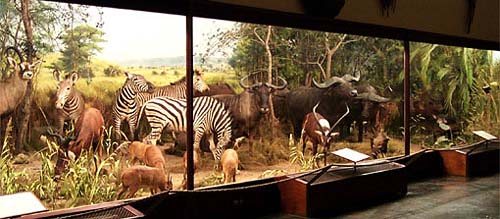
Powell-Cotton Museum, Quex House and Gardens
Welcome to one of the UK’s most fascinating visitor attractions. Whether you are looking for a family day out or a quiet stroll in beautiful surroundings, we look forward to welcoming you to Quex Park in Birchington, East Kent. Quex Park is home to the Powell-Cotton Museum and the Powell-Cotton family’s extraordinary collection of natural history, ethnography and fine and decorative arts. Quex House, the Powell-Cotton family home, invites you into the lives of this remarkable family. You can also step back into the world of Victorian horticulture by exploring the beautiful gardens.
The 15th-century Quex Estate was purchased by the financier John Powell (1721-1783) in 1777. His nephew, John Powell Powell (1769-1849), later demolished the old mansion and rebuilt it in the Regency style in 1813. The house was later remodelled and extended in the late 19th century. The beautiful 15 acre gardens to be seen today were developed in Victorian times.
The Powell-Cotton Museum at Quex Park was established in 1896 by Percy Horace Gordon Powell-Cotton (1866-1940) to house natural history specimens and cultural objects collected on expeditions to Asia and Africa.
Percy Powell-Cotton was a pioneer in the use of the diorama to display mounted animals against backdrops of their natural habitats. The Powell-Cotton Museum’s natural history dioramas are outstanding examples, unique to the UK, stunning for their size, quality and imagery. Today they still excite the imagination of young and old alike and the world-class natural history and ethnographical collections continue to support the study, understanding and simple enjoyment of the zoological, cultural and ecological diversity of Africa and the Indian sub-continent.
Further galleries in the museum contain Asian weaponry, a range of ceramics, jade and ivory from Europe, China and Japan, assembled by six generations of the Powell-Cotton family. In the summer season during the afternoons, several of the public rooms in Quex House are open to the public as well.
Read More
Gordon Highlanders Museum
Situated in the fashionable west end of Aberdeen, Scotland, in the former home of leading Scottish artist Sir George Reid, The Gordon Highlanders Museum offers a warm, friendly welcome to all our visitors and is a great day out for the family, a wonderful destination for lunch or a professional venue for your conference or meeting.
We look forward to welcoming you to the Museum in the near future.
Read More
Bruce Castle Museum
Bruce Castle (formerly the Lordship House) is a Grade I listed 16th-century manor house in Lordship Lane, Tottenham, London. It is named after the House of Bruce who formerly owned the land on which it is built. Believed to stand on the site of an earlier building, about which little is known, the current house is one of the oldest surviving English brick houses. It was remodelled in the 17th, 18th and 19th centuries.
The house has been home to Sir William Compton, the Barons Coleraine and Sir Rowland Hill, among others. After serving as a school during the 19th century, when a large extension was built to the west, it was converted into a museum exploring the history of the areas now constituting London Borough of Haringey and, on the strength of its connection with Sir Rowland Hill, the history of the Royal Mail. The building also houses the archives of the London Borough of Haringey. Since 1892 the grounds have been a public park, Tottenham’s oldest.
Read MoreGeorgian Theatre Royal
It was built in 1788 by the actor-manager Samuel Butler (died 1812 [2]) and was one of his circuit of theatres, the others being located in Beverley, Harrogate, Kendal, Northallerton, Ripon, Ulverston and Whitby, though none of these are now open. Regular performances at the theatre continued until 1830, when performances became less frequent and in 1848 it was let as an auction house. The Georgian Theatre Royal was reopened by a non-profit trust in 1963, it was expanded in 1996 and had major restoration works, including the addition of a museum, costing £1.6 million in 2002, reopening once again in 2003.[3] August 2016 saw the opening of The Georgian Theatre Royal Experience, a small but perfectly formed museum, detailing the history of the theatre and displaying artifacts from the theatre’s collection, as well as The Woodland Scene, reported to be the oldest surviving stage scenery in the world. In addition, the Paul Iles Learning Centre was reopened following extensive renovation, and now houses The Georgian Theatre Royal Youth Theatre as well as many events including volunteer open days, book groups and costume making sessions.
Read More
Hall Place and Gardens
Hall Place is a stately home in the London Borough of Bexley in south-east London, built in 1537 for Sir John Champneys, a wealthy merchant and former Lord Mayor of London. The house was extended in 1649 by Sir Robert Austen, a merchant from Tenterden in Kent. The house is a Grade I listed building and Scheduled Ancient Monument, and surrounded by a 65-hectare award-winning garden. It is situated on the A223, Bourne Road, south of Watling Street (A207) and north of the ‘Black Prince’ interchange of the A2 Rochester Way and the A220.
Read More