

Tunbridge Wells Museum and Art Gallery
Tunbridge Wells Museum & Art Gallery shares the special story of the Borough of Tunbridge Wells through fantastic collections of art, natural history, archaeology, craft, toys and so much more. It is a fascinating tale beginning with the discovery of the spa waters in 1606 – eventually giving birth to the Georgian ‘den of iniquity’ which would later become the byword for Victorian respectability.
The collection itself began in 1885 when the ‘Literary and Scientific Society’ began displaying their collections on The Pantiles. However, it was not until the 1950s that the bespoke neo-Georgian building was completed, which currently houses the Museum & Art Gallery along with the local library. The building is largely as it was originally built, save for an accessibility refurbishment in 2013 which added a lift and new way-finding.
The Museum & Gallery holds collections of regional and national importance, including the world’s largest collection of Tunbridge Ware, a large toy collection dating back to the 1700s, and one of the best Georgian portrait collections outside of London.
The story of Kent’s spa town is featured throughout, highlighting the decadence of the manor house and the Spartan lifestyle of the humble hop-picker.
All of this is complemented by a regular calendar of special exhibitions in the Art Gallery, which range from displays of modern or classical art to history and science. Each exhibition strives to show the best of the world to Tunbridge Wells, and the best of Tunbridge Wells to the world.
Read MoreSteyning Museum
There has been a castle in Bramber since the time of William the Conqueror. Steyning church was founded by a Saxon saint – with a very strange story. Upper Beeding grew around a Benedictine priory but who built the fantasy French chateau?
See what a fascinating place this is, lying across ancient chalk-downland tracks in West Sussex, with timber-framed houses and flint churches. There will be a warm welcome for you at the museum. We are independently run by volunteers, for the community, and admission is free.
Read MoreOrleans House Gallery
Orleans House was a Palladian villa built by the architect John James in 1710 near the Thames at Twickenham, England, for the politician and diplomat James Johnston. It was subsequently named after the Duc d’Orléans who stayed there in the early 19th century. By the early 20th century it was derelict and in 1926 it was mostly demolished. However, parts of the property, including a baroque octagonal room designed by architect James Gibbs, were preserved. The octagon room and its service wing are listed Grade I by Historic Englan, and, together, with a converted stable block, are now the Orleans House Gallery, a gallery of artrelating to the London Borough of Richmond upon Thames and neighbouring areas of London.[3][4][5]
Read MoreHaslemere Educational Museum
An award winning independent museum with remarkable collections of natural history, human history and geology. The Museum offers a lively programme of events and exhibitions and has a wonderful tradition of learning for all ages and abilities.
Set in beautiful historic grounds in the heart of Haslemere, the rich and diverse collections have been inspiring visitors for more than one hundred years.
Read MoreMuseum of London
The Museum of London documents the history of the English capital city from prehistoric to modern times. The museum is located on London Wall, close to the Barbican Centre as part of the striking Barbican complex of buildings created in the 1960s and 1970s as an innovative approach to re-development within a bomb-damaged area of the City of London.
The museum is a few minutes’ walk north of St Paul’s Cathedral, overlooking the remains of the Roman city wall and on the edge of the oldest part of London, now its main financial district. It is primarily concerned with the social history of London and its inhabitants throughout time. The museum is jointly controlled and funded by the City of London Corporation and the Greater London Authority.
The museum is the largest urban history collection in the world, with more than six million objects. It hosts more than one million visitors each year.
In March 2015, the museum announced plans to move from its Barbican site to nearby Smithfield Market. The move, contingent upon raising an estimated £70 million, is planned to be complete by 2021.
Read MoreClan Macpherson Museum
Started in 1946 by a group of clansmen in Scotland, the CMA now has a world-wide membership, from New Zealand to Sweden, from the United States of America to Borneo, with its traditional heartland being Badenoch in Scotland. Where a country has a sufficient density of membership local branches maintain local contact, but whether a member of a branch or not, we are all part of the Clan Macpherson Association. Branches operate in Australia, Canada, England & Wales, New Zealand, Scotland & Northern Ireland and the United States of America.
Read More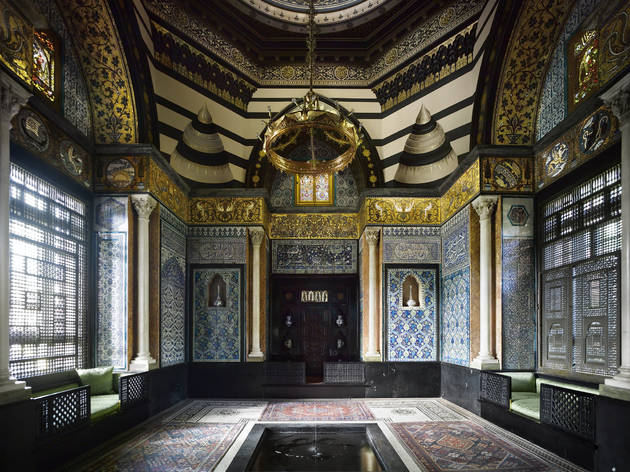
Leighton House Museum
Leighton House Museum is the former home of the Victorian artist Frederic, Lord Leighton (1830-1896). The only purpose-built studio-house open to the public in the United Kingdom, it is one of the most remarkable buildings of the nineteenth century, containing a fascinatingcollection of paintings and sculpture by Leighton and his contemporaries.
Built to Leighton’s precise requirements, the house was extended and embellished over the 30 years that he lived in it. From modest beginnings it grew into a ‘private palace of art’ featuring the extraordinary Arab Hall with its golden dome, intricate mosaics and walls lined with beautiful Islamic tiles. Upstairs, Leighton’s vast painting studio was one of the sights of London, filled with paintings in different stages of completion, the walls hung with examples of his work and lit by a great north window. Many of the most prominent figures of the Victorian age were entertained in this room; including Queen Victoria herself who called on Leighton in 1859. But Leighton lived alone in his palace, occupying the house’s only bedroom on the first floor.
Read More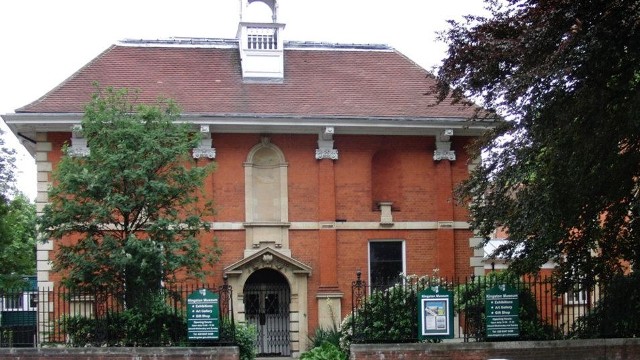
Kingston Museum
Kingston Museum is an accredited Museum in Kingston upon Thames, southwest London, England. Scottish American philanthropist Andrew Carnegie funded the building of the Museum which adjoins Kingston Library. The Museum runs a lively programme of temporary exhibitions and events and welcomes all visitors free of charge. Built in 1904 the Museum features three permanent galleries. Ancient Origins details the borough’s past from prehistory to Anglo Saxon times. Town of Kings charts Kingston’s development as a market town from the medieval period until the 1940s.
Holdings include 120 Martinware ceramics, some of which are on display. The Brill Collection comprises over 110 topographical artworks by Kingston University staff and students. This scheme to record the changing landscape of the borough was the brainchild of Reginald Brill, Head of the former Kingston School of Art, and ran from 1955 to 1971. The Friends of Kingston Museum successfully relaunched the scheme in 1997 and additions to the collection are made annually and displayed as part of a rolling programme in the Art Gallery stairwell.
Read More
Keats House
Discover the beauty of poetry and place in the home of the Romantic poet John Keats, now a museum and literary centre.
Explore the life and work of Keats through new exhibits of his original manuscripts and artefacts which tell the story of how the young poet found inspiration, friendship, and love in this stunning Regency villa.
The house comes alive with special events throughout the year, from poetry performances to family fun days. There’s always something to do in the house whenever you visit – listen to Keats’ world-famous poetry, watch a film about his busy life in Hampstead, or create your own poem.
Make sure to check the opening hours and how to get here before you visit.
Read More
Hackney Museum
Learn about the fascinating stories of people who have moved to Hackney and made it their home, from Anglo-Saxon settlers to early Victorian villas and recent refugees.
Discover this diverse and changing history through fascinating interviews, objects and images, listen to personal stories of living, working and moving to Hackney or join in with events and activities and share what Hackney means to you.
Read More