

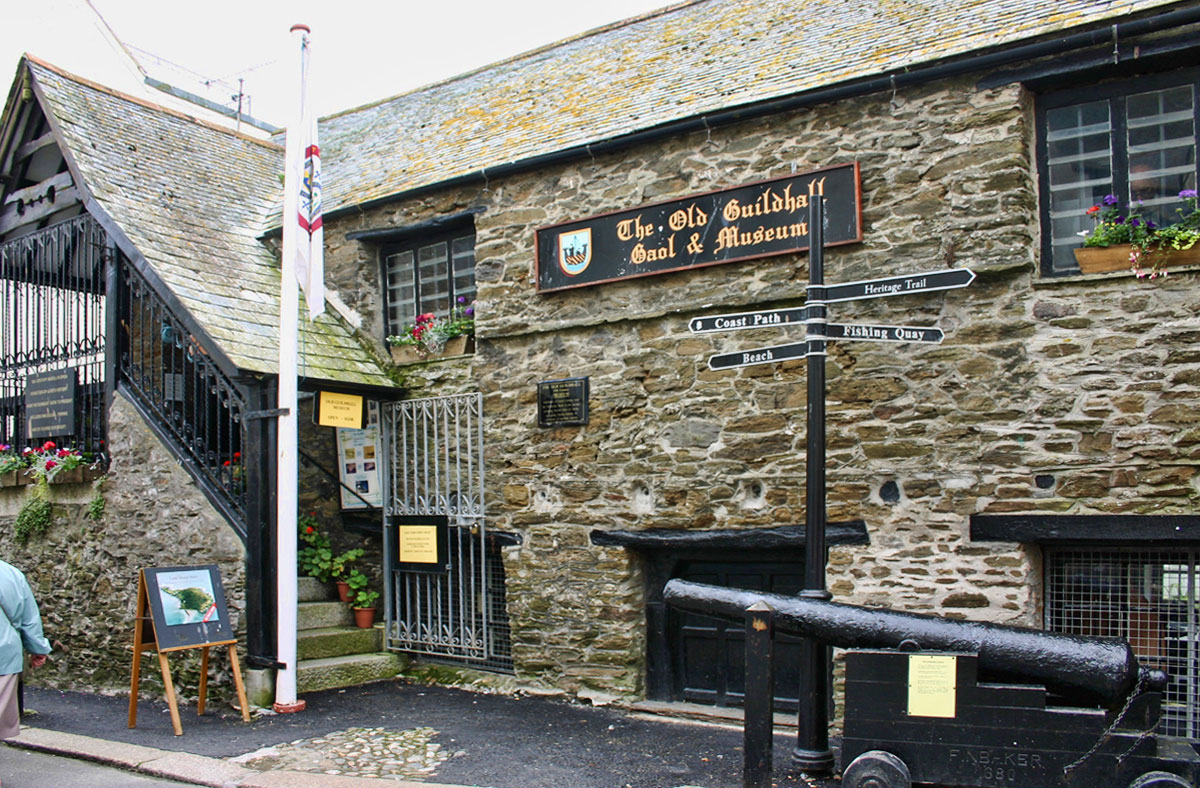
Old Guildhall Museum
Looe’s town museum is located in the 15th century Old Guildhall on the main street to East Looe’s sea front. Inside you will find fascinating displays about historic Looe focusing on fishing, boat building and, of course, smuggling.
The Old Guildhall building itself is worth a visit as it retains many of its original five century old features including the original prison cells, along with prisoners (OK, not real ones!). From 1587 to 1878, the building was the East Looe town hall with the magistrates court on the upper floor. Today you can still see the original raised magistrates bench complete with the royal coat of arms.
It was here, under the impressive timber-framed roof, that local laws were made and enforced and the town was administered. Exhibits here include the weights and measures used to enforce fair trading in those days.
Read More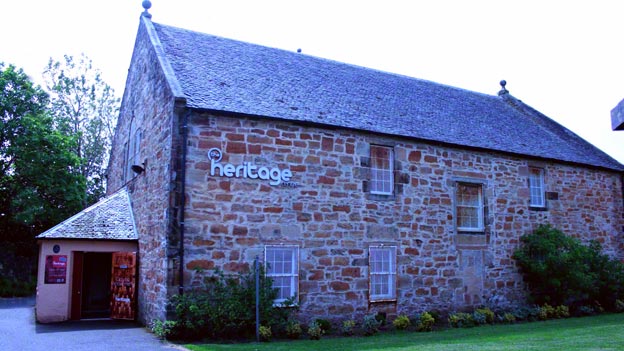
North Ayrshire Heritage Centre
Built in 1776, the former parish church in Saltcoats, houses our principal museum collection.
With an artefact collection of local, regional and national importance, many objects are displayed on a permanent basis along with regularly changing temporary exhibitions. The collection includes:
a stone sarcophagus, thought to be one of the finest examples of Scottish medieval sculpture
archaeology
social, domestic, military and natural history
costume
fine art
the Ardrossan Burgh Fire Engine, built in 1866 and used during the First World War.
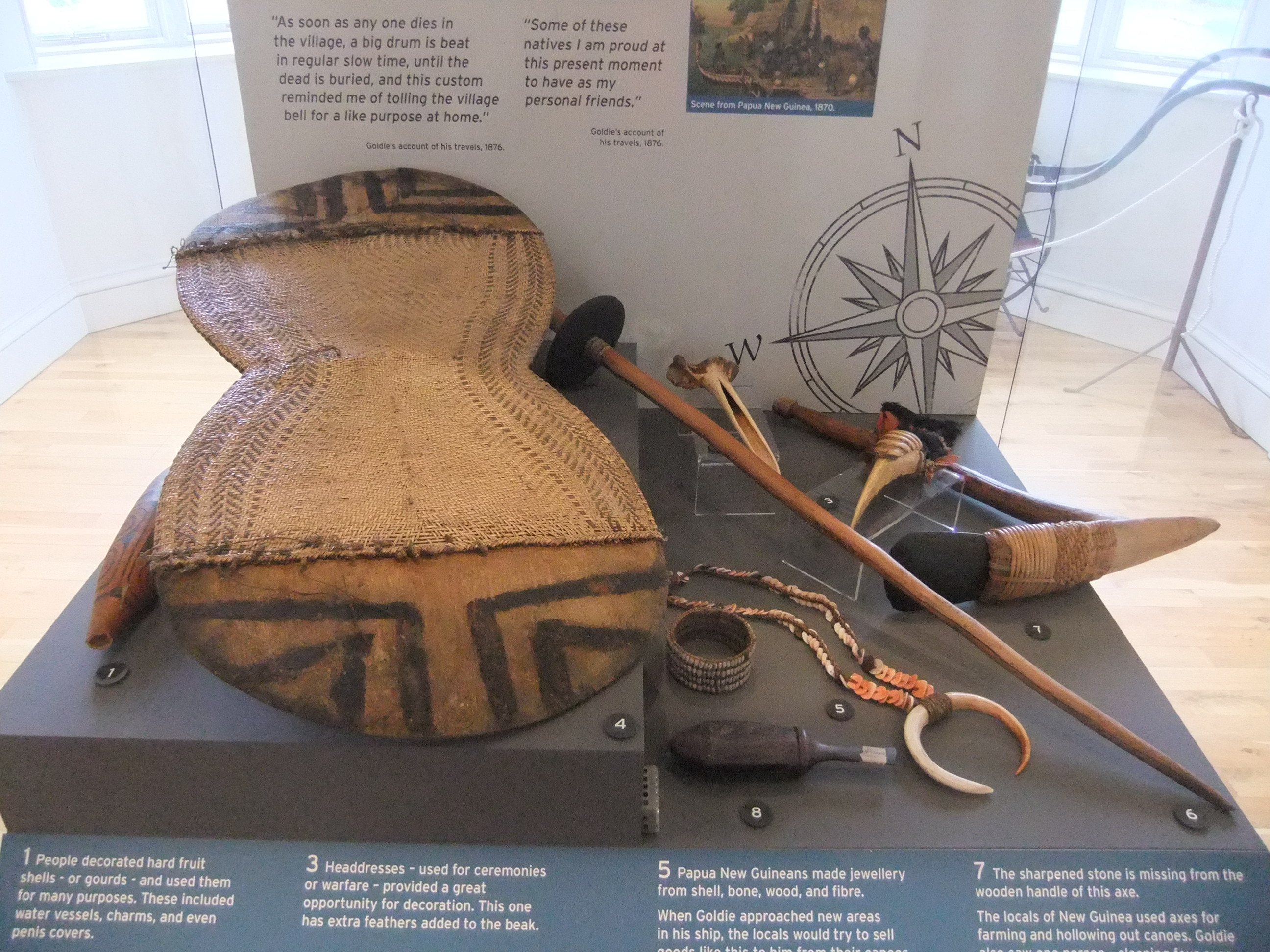
Museum of the Cumbraes
Explore the unique history of Millport and the islands of Great and Little Cumbrae at the Museum of the Cumbraes through a mix of permanent exhibits and temporary displays.
The Museum of the Cumbraes is located within the magnificent Garrison House, which was built in 1745. Objects on display highlight the island’s fascinating history and include: the Goldie ethnography collection, diaries of Mary Ann Wodrow, and a 4000 year-old stone cist. Separate School Room display in the courtyard.
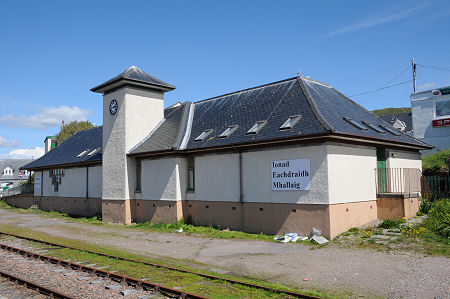
Mallaig Heritage Centre
Twelve centuries ago, West Lochaber was a buffer zone between native Picts, Norsemen and Scots. Briefly part of the Norse Kingdom of Man, it then became the eastern boundary of the powerful Lordship of the Isles.
Known in the Gaelic language as “An Garbh Chriochan” (The Rough Bounds), this area between Loch Hourn and Loch Sunart was, until the beginning of the 20th century, one of the least-visited areas of the British mainland, with most places being accessible only by sea or by an arduous trek through the glens. It is hardly surprising that this region is where the Jacobite claimant to the throne, Prince Charles Edward Stuart, took refuge after defeat at Culloden in 1746.
Not surprisingly, the area still retains its unique character and visitors return again and again, to enjoy its spectacular mountain and coastal scenery, pure white sandy beaches and one of the most spectacular railway journeys in Europe.
Read More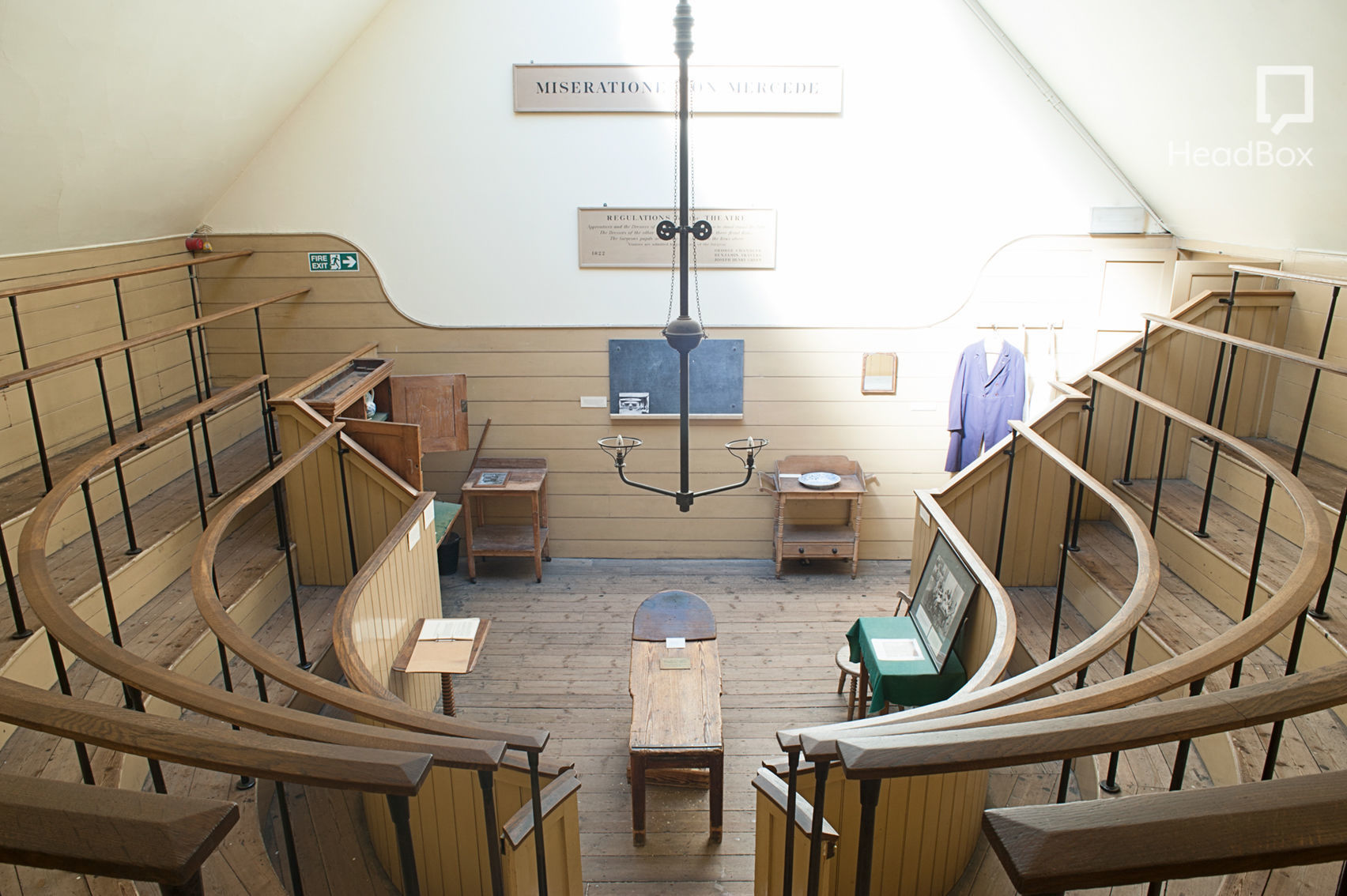
Old Operating Theatre and Herb Garret
Housed in the attic of the early eighteenth-century church of the old St Thomas’ Hospital, this atmospheric museum offers a unique insight into the history of medicine and surgery. The original timber framed Herb Garret was once used to dry and store herbs for patients’ medicines and in 1822 an operating theatre was included. Predating anaesthetics and antiseptics, it is the oldest surviving surgical theatre in Europe. Access to the attic is through a narrow 52-step spiral staircase.
The Church was dedicated to St Thomas Beckett and it probably originated as a chapel of the medieval hospital, but it is not known when it was first built on the present site. There was certainly a medieval church and it is known that one Richard Chaucer was buried there. Additions were made to the church in the early 17th-century, including the bell tower. By 1697, however, the Governors of the Hospital reported the church was so decayed that people were afraid to go inside.
St Thomas’ Church.
St Thomas’ Church was rebuilt between 1698 and 1702 in a more Neo-Classical style, with the first sermon recorded in July 1703.
The new church was a small structure built of red brick and white stone dressings with a single nave and a flat roof. It was fitted out with a large garret constructed in the ‘aisled-barn’ tradition.
The church shows many similarities to two other London churches: St James’ Piccadilly (1684) and Saint Benet Paul’s Wharf (1685).
Both of these churches were designed by the brilliant architect of St Paul’s Cathedral, Sir Christopher Wren. Wren was Governor of St Thomas’ at the time the Church was built, and had given £500 to the Hospital rebuilding fund. It seems highly probable his team was involved in its design, in any event, it was to be built by his master mason Thomas Cartwright, who had worked with him at the Church of St Mary-Le-Bow.
Read More
Museum of Army Flying
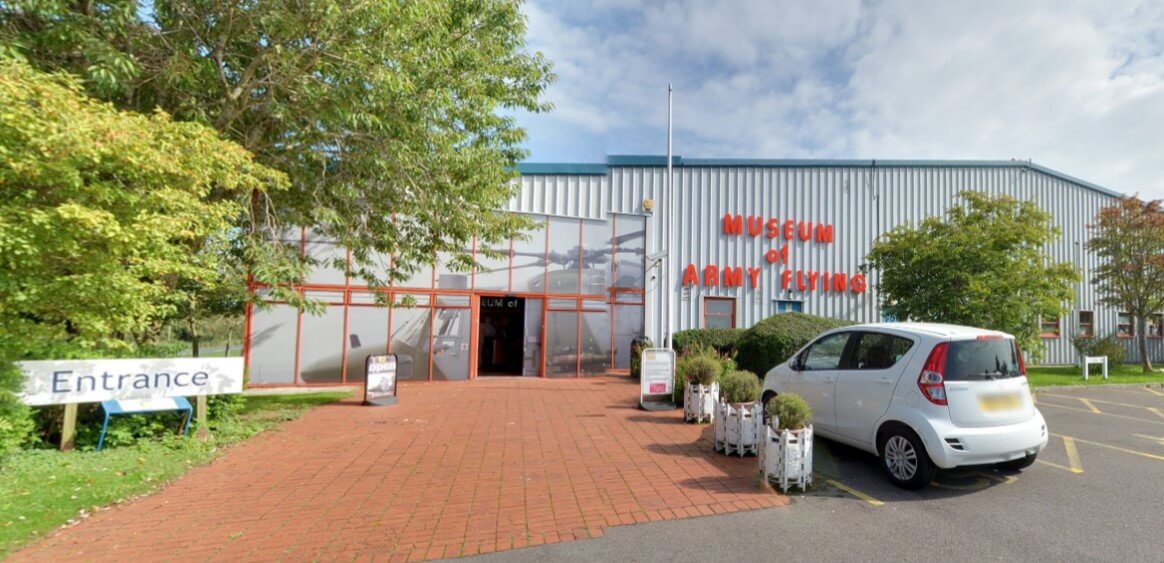
The Museum of Army Flying is a British military aviation museum about the history of flying in the British Army. It is located beside the Army Air Corps Centre in Middle Wallop, close to Andover in Hampshire, England.
The Museum covers the history of Army aviation from the Balloon sections of the Royal Engineers, through the establishment of the Royal Flying Corps in 1912 and Air Observation Post (AOP)Squadrons. It brings the story up to date with the establishment of the Army Air Corps in 1957, from the merger of the Glider Pilot Regiment and the AOP Squadrons.
The Museum also contains multiple flight simulators that anyone can use for a small fee. Outside the museum is a play park featuring aviation themed play pieces that kids can climb on, including a control tower based on the Middle Wallop control tower.
Read More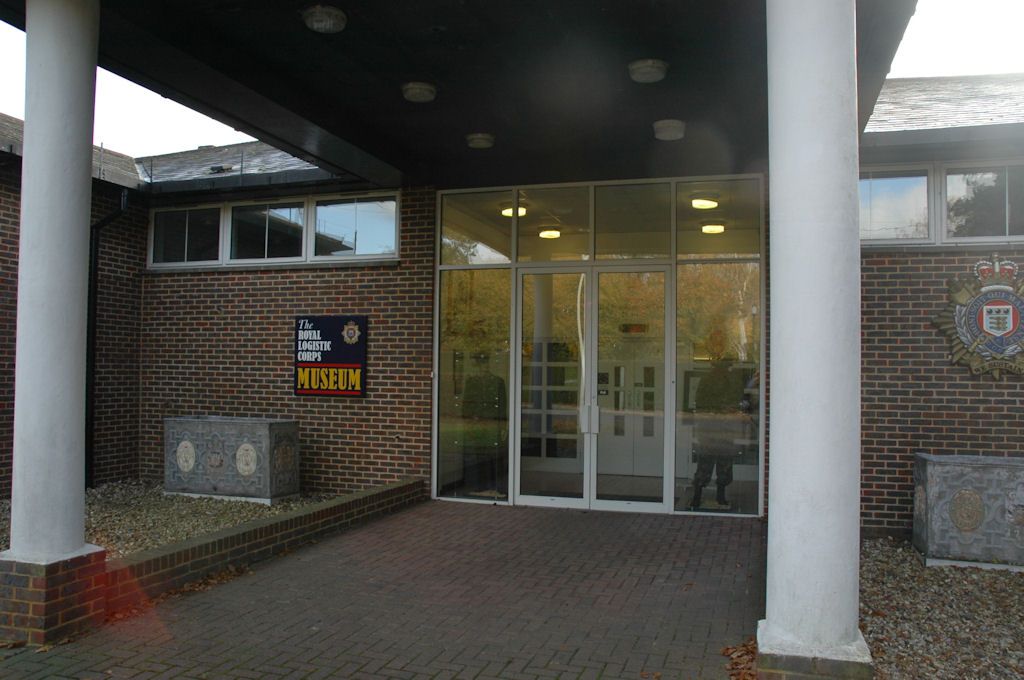
Royal Logistic Corps Museum
Starting in the Medieval period, the museum’s displays tell the story of the development of the British Army’s logistics. From requisitioned carts and the Board of Ordnance, to the Royal Waggon Train (formed in the late 18th Century and the first British military logistics corps) to the modern British Army’s Combat Logistic Patrols and high-tech solutions, we show the development of this part of the Armed Forces. Amongst the exhibits are some particularly notable items. There is a Royal Waggon Train sabretache, showing the Battle Honours of the Peninsula and Waterloo that the Corps earned. There are the medals of Captain Herbert Sulzbach, a German Jewish refugee from the Nazis who gave distinguished service for the Imperial German Army in World War I, the Royal Pioneer Corps in World War II and the West German government post-war.
And, of course, we have Field Marshal Bernard Montgomery’s staff car, a 1939 Rolls Royce Wraith, used from 1944-64. It was the first civilian vehicle to come ashore on the beaches of Normandy, just 3 days after D-Day, the Allied invasion of Western Europe in 1944. In 1964, Montgomery personally presented it to the Royal Army Service Corps Museum, as his drivers had all been members of that Corps. This famous car still runs and is can occasionally be seen at special events.
Other features include uniforms, medals, a scale model of a 1944 tank landing craft and FOB Campbell, a recreated British Army Forward Operating Base, showing where soldiers would both rest and work, during the conflicts in Iraq and Afghanistan.
The museum is fully-accessible, with all displays on a single ground-floor level, with full wheelchair access.
Read More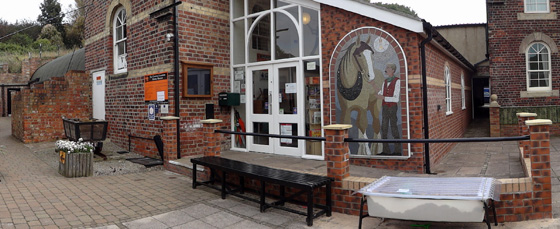
Cleveland Ironstone Mining Museum
Situated on the site of Loftus Mine, the first mine to be opened in Cleveland, the Mining Museum celebrates the legacy of ironstone mining and the broader industrial heritage of the region. The Tees Valley was the powerhouse of the Industrial Revolution and the British Empire. Her 83 ironstone mines dispatched iron worldwide, forming the fabric of railways and bridges across Europe, America, Africa, India and Australia.
On August 7th, 1848, the first mine in Cleveland opened in Skinningrove. It was the first of 83 ironstone mines in the region. Ultimately, they would dispatch iron worldwide, building railways and bridges all across Europe, Africa, America, India and even the Sydney Harbour Bridge in Australia.
Read More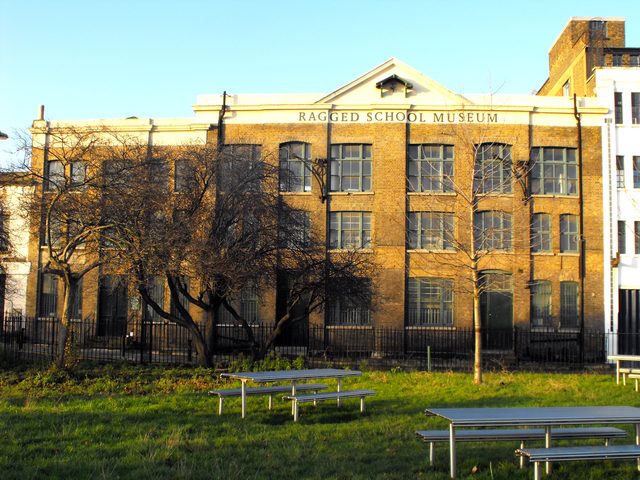
Ragged School Museum
The Ragged School Museum is a museum in the London Borough of Tower Hamlets. The museum was opened in 1990 in the premises of the former Dr Barnardo’s Copperfield Road Ragged School. The school opened in 1877 to serve the children of Mile End with a basic education. It was the largest of its kind at the time. It closed in 1908 when sufficient government/London County Council schools had been established to take over the work. At its height the school had more than 1,000 pupils on weekdays, and 2,400 Sunday school attendees. The team continued to organise events for the local community even after the school closed. The building saw later use as a factory.
The museum is housed in three canal side warehouses at 46–50 Copperfield Road.[4] The buildings were saved from demolition in the 1980s by local residents and a trust set up to manage the property in 1990. In December 2016 it was awarded a £4.3m restoration grant by the Heritage Lottery Fund.
The museum, which is run by volunteers, seeks to record the establishment in 1844 of the London Ragged School Union and to recreate the experience of how Victorian children would have been taught. It features a reconstructed Victorian classroom and a typical East End kitchen from 1900. Gallery areas also introduce local and cultural history of the East End.
Read More
Great North Museum: Hatton Gallery
Hatton History looks at a defining two decade period in the long 100+ year history of the Hatton Gallery and Newcastle University’s Fine Art Department (then King’s College, Durham University), through items held in the institutional archives and records.
1948-68 saw dramatic shifts occur across all aspects of the Gallery and Department; changes in how the students on the Fine Art course were taught and by whom, the establishment of a permanent collection of art and the development of an important and sometimes radical exhibition programme.
These changes were orchestrated by artists working in the Department, particularly the Professors Lawrence Gowing and Kenneth Rowntree and others such as Roger de Grey, Victor Pasmore, Richard Hamilton, Ian Stephenson, Eric Dobson, Derwent Wise, Rita Donagh and Matt Rugg.
Read More
