


Manchester Jewish Museum
Since the building became redundant through the movement of the Jewish population away from the area, it has been completely restored, returned to its former glory and listed Grade II*. More information about the building’s history.
With a compelling history to tell, the building needed a new purpose and in 1984 it re-opened as a Museum. The Museum now chronicles the lives of Jewish people in Manchester and their contribution to making the city what it is today. The former ladies’ gallery houses the Museum’s permanent displays, in which the history of Manchester’s Jewish community is vividly brought to life.
The Museum now offers a unique learning programme for schools, colleges and other organisations and hosts an exciting exhibition & events programme.
In partnership with Manchester City Council and Greater Manchester Police we are now a Hate Crime Reporting Centre.
Read More
Kilmartin House
Kilmartin Glen is one of the world’s most significant archaeological landscapes. The Glen’s unique archaeological remains and rich natural heritage were the inspiration for the creation of Kilmartin Museum, which opened in 1997.
For 20 years, Kilmartin Museum has been collecting, conserving, and revealing the stories of this special place and the artefacts found here.
Our Mission
Kilmartin Museum inspires and educates people by interpreting, explaining and conserving the internationally important archaeological landscape, artefacts and natural heritage of Kilmartin Glen.
Kilmartin Museum Company Ltd SC022744 (a Scottish Charitable Company SC502086) which operates the Museum is managed by a board of Directors, and run by a team of dedicated staff. We are also supported by our very valued volunteers.
As well as running a museum, café and shop, we run an active and vibrant education service which focuses on natural and cultural heritage and targets all age groups across the region. There is much more for us to learn about the people who lived here before us, so we also undertake archaeological research and excavation across Argyll to aid our understanding of this amazing place.
The Museum also houses the Marion Campbell Library, which acts as a valuable research resource.
How we are funded:
Kilmartin Museum is an independent charitable company, and we generate nearly 40% of the core income needed to operate through Museum visitor ticket sales, and the proceeds from the café and shop.
The ‘Friends of Kilmartin Museum’ organisation is also an important means of support.
As well as being reliant on donations, the remainder of our core funding comes from Argyll and Bute Council and Historic Environment Scotland. Both these agencies, along with Forestry Commission Scotland, The Robertson Trust and Scottish Natural Heritage provide grant support for the Museum’s Education Service.
Our Redevelopment Project development phase is funded by Argyll and Bute Council, Heritage Lottery Fund and Highlands and Islands Enterprise.
Individual projects run by the Museum have received support from a number of agencies, trusts and foundations.
Read More
Bramall Hall
Bramall Hall is a superb example of a Tudor Manor House with origins dating back to the Middle Ages.
The Hall, one of the most beautiful treasures of England, is of great national importance. The magnificent 16th Century wall paintings, striking Elizabethan plaster ceiling, the Victorian Kitchens and Servants’ Quarters give this Hall its unique charm.
The Hall offers unique insights into the families and servants who lived and worked here. It stands in about 60 acres of parkland designed in the Victorian Romantic style. It offers woodland walks with intriguing glimpses of the Hall itself and of the brooks and lakes.
Read More
Portland Basin Museum
Portland Basin Museum is housed within the restored nineteenth century Ashton Canal Warehouse in Ashton-under-Lyne. The museum combines a lively modern interior with a peaceful canal side setting. It is an exciting family friendly museum, with something for all the family.
Enjoy our temporary exhibition, and step back in time on our 1920s street, as the sights and sounds of bygone Tameside are brought to life. Take a look into our kitchen and parlour to find out how we used to live. Visitors can explore the area’s industrial heritage and discover what life was like down the mines, or on the farm. Find out more about local crafts and industries and marvel at our historic machines. Younger children will love our ‘Nuts and Bolts’ educational play area, suitable for children under 5.
Read More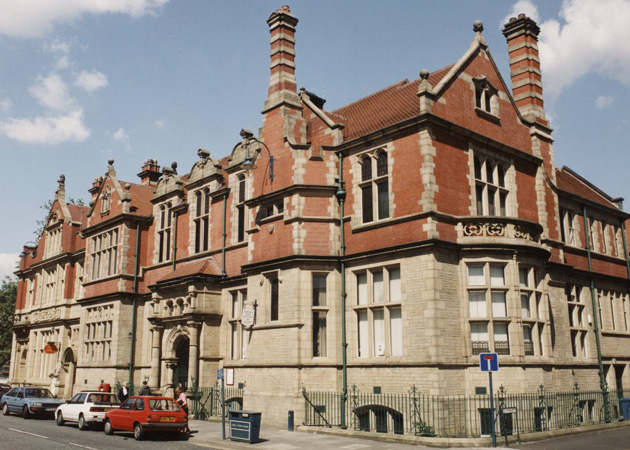
Astley Cheetham Art Gallery
The Astley Cheetham Art Gallery in Stalybridge was built as a gift to the town by John Frederick Cheetham and his wife Beatrice Astley in 1901. The Gallery originally opened as a lecture theatre and then the space was turned into a gallery to house the Astley Cheetham Art Collection, bequeathed in 1932. This collection has grown with gifts and donations throughout the twentieth century and is one of the most interesting small regional collections. Alongside collection exhibitions, the gallery hosts a programme of temporary exhibitions by regional artists. Of particular interest is the collection of Early European paintings, especially worth noting is the rare altar piece by the Master of the Straus Madonna.
Read More
Museum of Transport, Greater Manchester
The Museum tells the story of public road transport in Greater Manchester from its very beginnings in 1824 to the present day. The collection spans over 100 years, from an 1890s horse bus to a full size prototype Metrolink tram.
Opened in 1979, the Museum is a partnership between Transport for Greater Manchester and Greater Manchester Transport Society and is an early example of successful partnership working between a local authority and a voluntary body.
Motor bus services in Greater Manchester were originally operated by local authorities, with additional services provided by private companies. In 1968 the Government reorganised bus services in the metropolitan counties such as Greater Manchester and Passenger Transport Executives were created to provide local bus services instead. Known as SELNEC (South East Lancashire and North East Cheshire), the PTE was renamed Greater Manchester Transport in 1974 when Wigan was included.
Fourteen former bus operators were merged into Greater Manchester Transport and all are represented in the Museum: the transport departments of the corporations of Ashton-under-Lyne, Bolton, Bury, Leigh, Manchester, Oldham, Ramsbottom, Rochdale, Salford, Stockport and Wigan, as well as Stalybridge, Hyde, Mossley and Dukinfield Transport Board, the once independent Lancashire United Transport and most of the former National Bus Company subsidiary North Western Road Car Company.
Read More

Museum of Science and Industry (MOSI)
The Museum of Science and Industry is devoted to inspiring our visitors through ideas that change the world, from the Industrial Revolution to today and beyond.
It’s a story that we’re uniquely placed to tell—on the site of the oldest surviving passenger railway station, in the heart of the world’s first industrial city, today alive with innovative discoveries in science and technology.

The Fusilier Museum and Learning Centre
The Fusilier Museum and Learning Centre is an Educational Charity (No 1115452). We are a not for profit organisation and invest all our income into protecting, caring and communicating about our collection.
The museum is governed by a Board of Trustees, headed up by Chairman Colonel Brian Gorski. There is a team of permanent staff who run the museum and a large group of volunteers (of all ages, experiences and backgrounds) who help to bring the museum to life.
Read More
Hall Iʼ Thʼ Wood Museum
his Grade 1, 16th century half-timbered hall is one of the north-west’s most important buildings.
Visitors can enjoy displays of 17th and early 18th century furniture, objects and artefacts, learn more about the life and work of Samuel Crompton and discover all about life in Stuart and Tudor times.The rooms have been accurately refurbished to retain their homely atmosphere.
Hall i’ th’ Wood Museum started life as a rich merchant’s home during the mid-17th century. Years later the building was split into several rented dwellings and, whilst living in one of these with his family, Samuel Crompton famously invented the Spinning Mule in 1779.
The mule went on to be one of the most significant spinning machines used by the textile industry. The house and grounds were presented to the people of Bolton in memory of Samuel Crompton and opened to the public as a museum in 1902.
Read More
Dimbola Museum and Galleries
For 15 years between 1860 to 1875, Dimbola was Julia’s home and workplace. Now preserved by the Julia Margaret Cameron Trust and open to the public.
Once two adjacent dwellings in the rural idyll of Freshwater Bay, the Camerons built a central tower to form their new home. The name ‘Dimbola’ was chosen by the Camerons after the tea and coffee plantations they owned in Dimbula, Sri Lanka.
As she records in her memoirs, she turned an old ‘glazed fowl house’ into a studio, and set about photographing everyone from famous visitors to her own maids, locals and children.
Inside the house now are preserved features including Gothic carvings, William Morris wallpaper, her original design stairway, Victorian glass and a re-creation of her bedroom.
Read More