

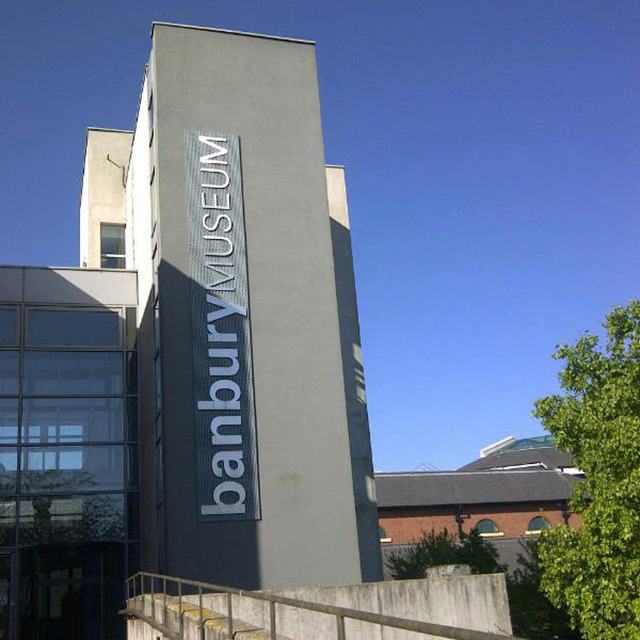
Banbury Museum
Banbury Museum is a family friendly museum located in Banbury’s town centre, next to the idyllic canal side, and opposite Tooley’s historic boatyard.
The Civil War, plush manufacturing, the Victorian market town, costume from the 17th century to the present day and the Oxford Canal: these are just some of the stories illustrated in the museum’s galleries. There are also regularly changing exhibitions and activities to ensure that there is always something new to see and do.
Recent exhibitions have included Grayson Perry, LEGO® Brick Wonders, Artists at War and many others.
Read More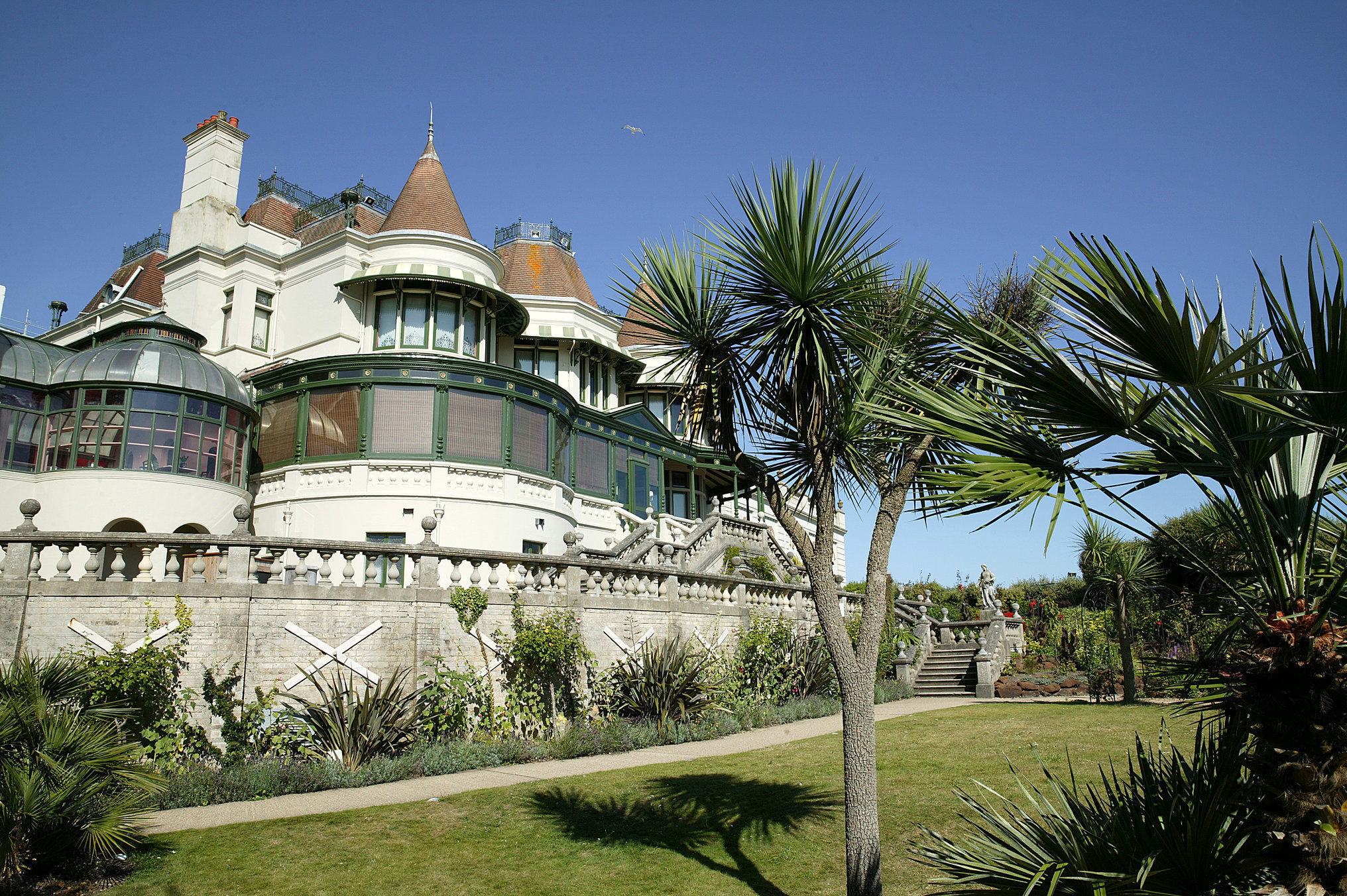
Russell-Cotes Art Gallery & Museum
Welcome to the Russell-Cotes: House Gallery Garden – One of the most fascinating historic houses in England. The Russell-Cotes was the home of two Victorian collectors and travel enthusiasts, Sir Merton and Lady Annie Russell-Cotes.
There is a regular programme of exhibitions featuring both art and artefacts from the Russell-Cotes own extensive collections, and talks, tours and events take place throughout the year. See the website for full details, visit russellcotes.com.
“For many years I had it in mind that someday I would build a house after my own heart, as an offering of love and affection to my wife.”
Merton Russell-Cotes
In 1901, Merton gave his wife Annie a dream house on a clifftop, overlooking the sea. It was an extraordinary birthday present – lavish splendid, and with a touch of fantasy.They filled this exotic seaside villa with beautiful objects from their travels across the world, and lined the walls with a remarkable collection of British art, creating a unique atmosphere in a most dramatic setting.
Then they sealed it in time and gave it to the future…
The main hall has a remarkable collection of high Victorian and Pre-Raphaelite art, including many works by women artists. Other rooms house souvenirs from the couple’s travels, with works from Russia, Australia, New Zealand and the world-renowned Japanese collection. With stunning views, a serene cliff-top garden and stylish café, Merton’s extravagant gift to his wife is one of Bournemouth’s most intriguing visitor attractions.
Read MoreKingsbridge Cookworthy Museum
The museum was opened in 1972 in the old Kingsbridge Grammar School buildings. Mrs Evelyn Northcott persuaded English China Clays Ltd. to rescue the derelict building and found a museum to collect and record the social history of the area.
The Museum was named after William Cookworthy, who was born in Kingsbridge, and who developed the first true hard-paste porcelain (“china”).
The Museum facilities now include:
- Displays of artefacts from the early history of Kingsbridge through to the present day;
- A gallery of agricultural machinery and tools;
- A collection of over 16,000 photographs dating from the 1870’s through to the present day;
- Costumes from the 19th and 20th centuries;
- A viewing gallery giving a virtual tour of the Museum;
- A resource centre to support personal research. This has many local documents including microfilm copies of local newspapers from 1855 to the present.
Isles of Scilly Museum
Following the severe gales in the winter of 1962, Nornour (Eastern Isles) yielded some remarkable Romano-British finds, causing some St Mary’s residents to establish a local museum. Initially the only viable option was a temporary display in the Wesleyan Chapel during the summer months. After much fundraising and thanks to huge volunteer enthusiasm, the present Museum was built. It opened to the public on July 15th 1967 and received a visit from H.M. Queen Elizabeth II on August 8th 1967.
COLLECTIONS
Our collections are extremely diverse, including material from many wrecks; a wild flower display (during the summer months); Romano-British artefacts; stuffed birds; local art and much more. Thanks to the generosity of local and mainland benefactors, we have received many varied accessions for research and display purposes. We welcome any items of Scillonian provenance or directly relating to the islands.
Read MoreCheltenham Art Gallery And Museum
In 1898 the third Baron de Ferrieres, a former Mayor and MP for Cheltenham, gave 43 important paintings, mostly from Belgium and the Netherlands, to the town, together with £1000 towards the building of a gallery in which to house them. This was opened in 1899.
In 1905 the Schools of Art and Science left the premises they occupied next door to the Art Gallery, and the Museum was opened in these rooms two years later. From that time the collections grew in number and in quality, with the great majority generously given by the people of Cheltenham. In 1975 a branch museum was opened in the birthplace of Gustav Holst, the composer, which was completely furnished from the collections. This became an independent museum in 2000. In 1983 a museum was opened to display the costume collection in Cheltenham’s most important historic building, the Pittville Pump Room: this was closed in 1999.
The first real increase in space and visitor facilities came in 1989 when HRH The Princess Royal opened an extension to the Art Gallery & Museum. This is the building in which the main entrance is sited.
Read MoreGlastonbury Abbey
The Saxons, who had been converted to Christianity, conquered the ancient county of Somerset in the 7th Century. Their King was Ine of Wessex, who was widely regarded as one of the most important figures in the history of the abbey. He was a local man who boosted the status and income of the abbey, and it is said that he put up a stone church, the base of which forms the west end of the nave.
This church was enlarged in the 10th century by the Abbot of Glastonbury, St. Dunstan, who became the Archbishop of Canterbury in 960.
In 1066, the wealth of the abbey could not cushion the Saxon monks from the disruption caused by the foreign invasion and subsequent conquest of England by the Normans.
Skilled Norman craftspeople contributed much to the abbey by adding magnificent buildings to the existing Saxon Church. These were built to the east of the older church and away from the ancient cemetery.
The Norman betterment of the abbey was extensive. In 1086, when the Domesday Book was commissioned to provide records and a census of life in England, Glastonbury Abbey was the richest monastery in the country.
The great Norman structures were consumed by fire in 1184 when many of the ancient treasures were destroyed. One story goes, that in order to raise extra funds from pilgrims to rebuild the abbey the monks, in 1191, dug to find King Arthur and his Queen Guinevere; and bones from two bodies were raised from a deep grave in, the cemetery on the south side of the Lady Chapel. These bones were reburied, much later, in 1278 within the Abbey Church, in a black marble tomb, in the presence of King Edward I.
When the monastic buildings were destroyed in the fire of 1184, the medieval monks needed to find a new place to worship. There is evidence that the 12th century nave was renovated and used for this purpose for almost 30 years, until some of the work was completed on the new church. The monks reconsecrated the Great Church and began services there on Christmas Day, 1213, most likely before it was entirely completed.
In the 14th century, as the head of the second wealthiest abbey in Britain (behind Westminster Abbey), the Abbot of Glastonbury lived in considerable splendour and wielded tremendous power. The main surviving example of this power and wealth is to be found in the Abbot’s Kitchen – part of the magnificent Abbot’s house begun by John de Breynton (1334-42).
Privileged pilgrims might once have stayed in the abbey itself; excavations have disclosed a special apartment at the south end of the Abbot’s house, erected for a visit from the English King, Henry VII.
In 1536, during the 27th year of the reign of Henry VIII, there were over 800 monasteries, nunneries and friaries in Britain. By 1541, there were none. More than 10,000 monks and nuns had been dispersed and the buildings had been seized by the Crown to be sold off or leased to new lay occupiers. Glastonbury Abbey was one of principal victims of this action by the King, during the social and religious upheaval known as the Dissolution of the Monasteries.
Read MoreLocksmithʼs House
The Locksmith’s House celebrates the efforts of the small family run lock making businesses which thrived over a century ago. Working from the back yards of their own houses, hundreds of small family businesses evolved.
A visit to the Locksmith’s House will demonstrate how such a business operated alongside family life.
The house is recreated with the actual belongings and furniture of the Hodson family of lock makers, the last inhabitants of 54 New Road, Willenhall. The working class family home is accompanied in the back yard by a two-storey workshop building. A working forge and machinery adds to the atmosphere. Our lock display gallery offers an insight into some extraordinary locks from across the ages.
Our costumed guides will be happy to escort you around the property, and hands-on activities such as making a rag rug or toasting on the kitchen range can be arranged for your group.
At the moment the Locksmith’s House is only open to the public on open days, for special events and for pre-arranged group visits.
Read MoreDr Jennerʼs House, Museum and Garden
The Chantry is the Grade II* Listed Queen Anne style mansion where Edward Jenner lived from 1785 until his death in 1823. Although best-known for its role in the discovery of vaccination, the house itself has a fascinating history.
There is evidence of human activity on this site since at least the Roman period and its proximity to the Anglo-Saxon double minster church gave it prominence until the early medieval period and the construction of Berkeley Castle.
After a period of the site being used for construction work and light industry, a house was built here to provide a residence for a priest tending one of the chantry chapels in St Mary’s Church. The modern name of the house, The Chantry, recognises this history. After the abolition of the chantries in the mid-1500s the house was sold and became a private residence.
In 1707, Charles Weston built a new residence, perhaps incorporating some of the earlier building, and, although later residents including Jenner made their own additions and alterations, much of what you can see today dates from this time.
Read MoreKeep Military Museum
Today the Keep Military Museum is a striking landmark in the heart of Dorchester. Completed in 1879, it was designed to resemble a Norman Castle, and is built of Portland stone which gives it a white appearance. In ‘British Barracks 1600-1914’, James Douet explains that:
‘The ‘keep’ or armoury at Dorchester was an unusually realistic interpretation of a medieaval castle, by the army’s standards, which must have been in response to local sensibilities over the historic character of the town.’
The design did not find favour with everyone. Pevsner, in ‘The Buildings of England” describes it thus:
‘The monumental gatehouse is a knock-down affair. Two round towers to the front, the archway between. Three storeys of long slit windows. Rock faced with a vengeance. Today it is a grade 2 listed building. The designer was probably Major AC Seddon R.E, head of the War Office Design branch at this time…The barracks behind were humble by comparison.’
The Keep Military Museum, DorchesterA contemporary report in the Dorset County Chronicle and Somerset Gazette, 27 Mar 1879 was more complimentary:
‘…a gateway of random rockwork in Ridgeway stone, with round and massive towers and battlemented surrounding…The Keep is to rise to a height of 65 feet…At the basement of the ponderous and formidable structure are guardhouse and prisoners cells, with all the necessary accessories. A range is provided for the supply of hot water to warm the three cells. At the rear of the cells is a yard for the exercise of prisoners.’
One of the three cells remains today and the museum has reconstructed it to give visitors an impression of life in a prison cell.
The Function of The Keep
The Keep was originally the gatehouse for the Depot Barracks of the Dorsetshire Regiment as well as the County Armoury. It was completed in 1879, in time for the amalgamation of 39th and 54th Regiments of Foot who become the 1st and 2nd Battalions The Dorsetshire Regiment in 1881. The Depot Barracks were the administrative centre for the Dorsetshire Regiment and its centre for recruitment and training. The Depot carried out this function between 1879 and 1958 with only one break. This was during World War Two when the barracks was used by the 701st Ordnance Light Maintenance Company and the 1st Quartermaster Company of the American Armed Forces.
Read MoreHolst Birthplace Museum
Gustav Holst, composer of The Planets, was born in this Regency house in 1874. The Museum was set up in 1975 to celebrate Cheltenham’s most famous son and also to offer a glimpse into what life was like for an ordinary 19th century family living in the town. Step back in time as you wander through its historic rooms, including Holst’s Victorian bedroom, nursery, kitchen and scullery. Imagine Cheltenham’s Regency past in the only Regency room open to the public in the town, complete with hand blocked wallpaper, fine furnishings and 19th century art collection. See and listen to the piano Holst used to compose The Planets in a recreation of his music room. Delve deeper into his life in the Holst Discovery Space, through archives and film. Drop into the Learning Space for one of our regular family activities
We are a small, independent museum governed by the Holst Birthplace Trust, registered charity number: 1078599.
Read More